

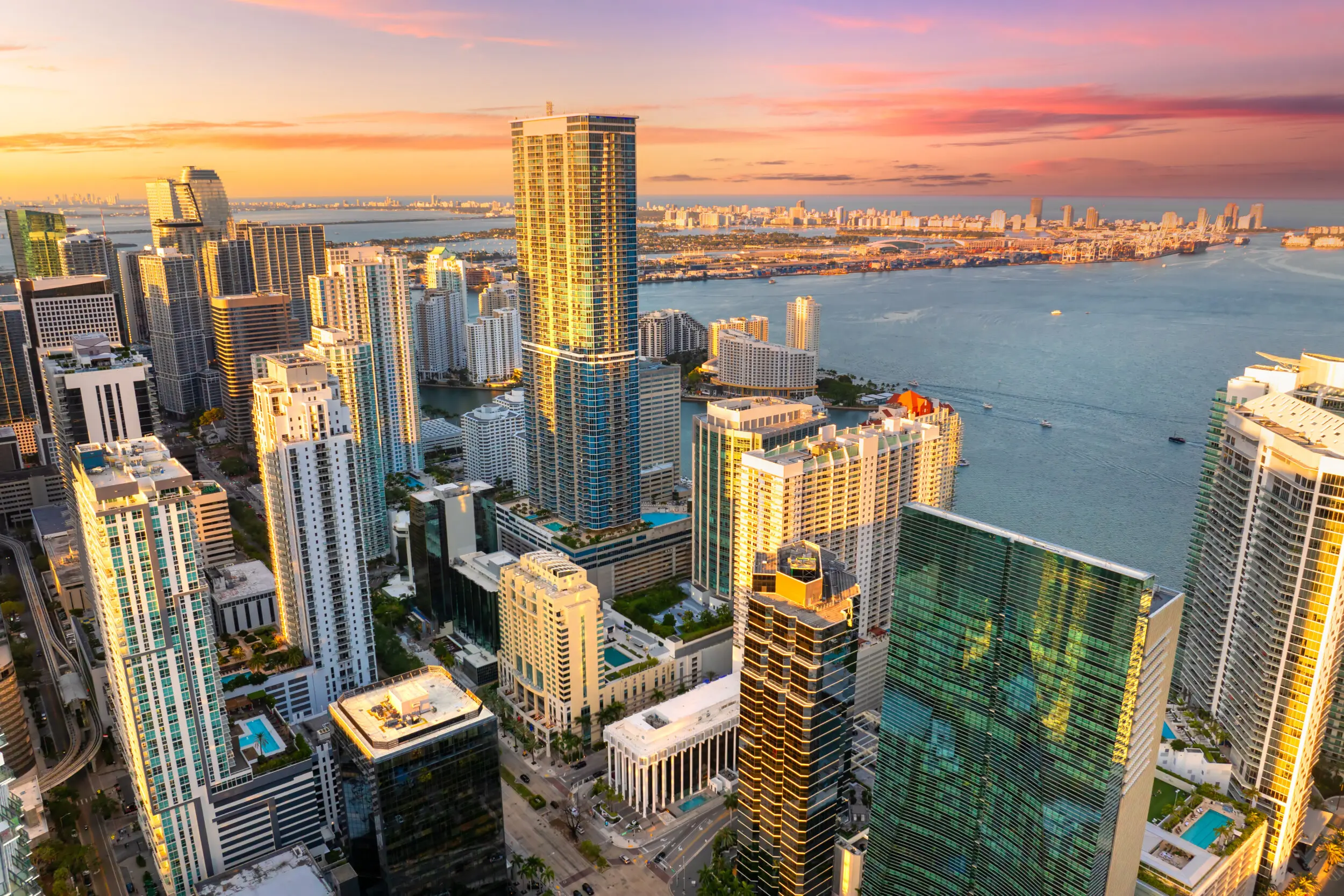
Miami-Dade County is no longer just a lifestyle market for second homes, tourism, and seasonal capital. Over the last several years, money from New York, Los Angeles, Chicago, Greenwich, and Silicon Valley has helped reshape South Florida into a serious institutional investment hub. For private investors, the story is bigger than luxury condos and headline relocations: it is about how financial firms, founders, family offices, and high-income households are changing the value of land, housing, office space, and long-held family assets across Miami.
Wall Street and LA Capital Redraw Miami’s Map
The migration of capital from New York and Los Angeles to South Florida has turned Miami-Dade Real Estate into one of the most closely watched private investment markets in the country. What was once viewed mainly as a gateway to Latin America and a hospitality-driven economy is now being treated as a permanent base for finance, technology, real estate, private credit, and wealth management. Miami-Dade has benefited from Florida’s tax structure, warmer weather, improved business reputation, and a lifestyle that appeals to executives who can now work from anywhere. The result is a market where capital is not simply visiting—it is planting roots.
Several major firms have either moved headquarters, opened offices, or significantly expanded their presence in South Florida. Citadel, led by Ken Griffin, announced a headquarters move from Chicago to Miami and has become one of the most visible symbols of the shift. Elliott Management relocated its headquarters from New York to West Palm Beach. Blackstone expanded its technology and operational presence in Miami, while Thoma Bravo established a major Miami office. Other notable names with South Florida ties or expansions include Apollo Global Management, Millennium Management, Icahn Enterprises, Point72, Schonfeld Strategic Advisors, and Starwood Capital Group, which has long had a major presence in Miami Beach.
This concentration of financial talent changes the local map. Brickell, Downtown Miami, Wynwood, Coconut Grove, Miami Beach, Coral Gables, Edgewater, and parts of North Miami are no longer being evaluated only by local demand. They are increasingly underwritten by national and global capital standards. Office buildings that can attract financial tenants, luxury residential projects near walkable urban neighborhoods, boutique hotels, branded residences, marinas, private clubs, and mixed-use developments are all being reconsidered through the lens of incoming wealth. Private investors watching Miami today are not just looking at growth; they are looking at a repricing of land and location.
Los Angeles capital is also part of the story, especially from entertainment, technology, real estate, and family office networks. Investors who previously concentrated on Beverly Hills, Santa Monica, West Hollywood, and Malibu are increasingly comparing those markets with Miami Beach, Surfside, Bal Harbour, Coconut Grove, and Coral Gables. The appeal is not only tax-related. Miami offers proximity to Latin America, a growing luxury consumer base, strong air connectivity, and a brand that has become globally recognizable. For private investors, this means Miami-Dade is becoming less of a regional market and more of a competing capital destination against New York, Los Angeles, and other global cities.
Private Equity Moves Fuel South Florida Deals
Private equity and hedge fund activity in South Florida is affecting more than office leasing headlines. These firms bring principals, employees, service providers, attorneys, accountants, consultants, lenders, and family offices. That ecosystem creates demand across the investment spectrum. Wealth managers need office space. Executives need homes. Funds need local banking relationships. Developers seek equity partners. Entrepreneurs look for growth capital. As the financial community grows, South Florida gains the kind of deal flow that historically concentrated in Manhattan, Los Angeles, Boston, and San Francisco.
Investment activity has been especially visible in real estate. Institutional and private capital are pursuing luxury multifamily, Class A office, mixed-use projects, senior housing, medical office, industrial warehouses, last-mile logistics, and hospitality assets. Areas near Miami International Airport, PortMiami, Doral, Hialeah, Medley, and the airport-west corridor are drawing attention because logistics demand continues to expand. Brickell and Downtown Miami remain central for office, residential towers, and hospitality. Wynwood has become a favorite for adaptive reuse, creative office, multifamily, retail, and nightlife-driven investment. Coral Gables and Coconut Grove attract capital seeking lower-density, high-income, long-term residential demand.
Private credit is another important part of the shift. As banks become more selective, private lenders and debt funds are stepping into construction loans, bridge loans, acquisition financing, and rescue capital. For private investors, this creates opportunity on both sides of the table. Some investors can participate as lenders and earn yield backed by real estate collateral, while others can use private credit to acquire or reposition assets that traditional lenders may not finance quickly. In a market moving as fast as Miami-Dade, access to flexible capital can be the difference between winning and losing a deal.
At the same time, the influx of outside capital is creating a more competitive underwriting environment. Cap rates have compressed in favored neighborhoods, land sellers have raised expectations, and development costs remain high because of labor, insurance, financing, and materials. Investors can no longer assume that Miami is “cheap” compared with New York or Los Angeles. In many submarkets, the discount has narrowed sharply. The best opportunities may come from complicated assets: properties with zoning upside, fragmented ownership, deferred maintenance, under-market rents, assemblage potential, or family ownership structures that require patience and careful negotiation.
Family Landowners Face Rising Values and Costs
For families that have owned property in Miami-Dade for decades, the current market can be both a blessing and a burden. Long-held assets in neighborhoods such as Little Havana, Allapattah, Little Haiti, Liberty City, Overtown, Westchester, Hialeah, North Miami, Homestead, and unincorporated Miami-Dade may now sit in the path of major growth. Land that once produced modest rental income or served as a family homestead may suddenly attract calls from developers, brokers, private equity-backed buyers, and assemblage groups. In many cases, the value increase can be life-changing.
The challenge is that rising values often come with rising carrying costs. Property taxes, insurance premiums, repairs, code compliance, association fees, legal costs, and estate-related expenses can pressure families that are asset-rich but cash-poor. If a property has been passed down through generations, the deed may include multiple heirs, outdated ownership structures, unclear probate issues, or disagreements among family members. That can make it difficult to refinance, sell, lease, or contribute the property into a development partnership. For title and deed holders, capacity to hold is often just as important as the value on paper.
This is where private investors may find meaningful opportunities, but the approach must be thoughtful. Families with long-term ownership may benefit from alternatives to an outright sale, including ground leases, joint ventures, seller financing, partial sales, air-rights transactions, assemblage participation, or long-term income agreements. A family that can withstand the carrying costs may be able to wait for zoning changes, infrastructure improvements, neighborhood appreciation, or a stronger development proposal. In a fast-growing market, time can be an asset—if the owners have the liquidity and organization to hold.
For private investors, the key is to understand that Miami’s affordability shift is creating stress as well as opportunity. New wealth entering the market has pushed up home prices, rents, insurance expectations, and land values, making it harder for many local residents and small businesses to remain in place. But it also gives legacy owners a chance to unlock generational wealth if they receive good advice, clean up title issues, understand tax consequences, and avoid being rushed into below-market deals. The investors who succeed will be those who combine capital with patience, local knowledge, and respect for the families who owned Miami before the current boom.
New York and Los Angeles capital are helping transform Miami-Dade into a deeper, more institutional, and more expensive investment market. For private investors, the opportunity is real, but it requires discipline: understand where financial firms are clustering, follow the infrastructure and zoning changes, evaluate affordability pressures, and pay close attention to legacy landowners who may hold the next wave of valuable development sites. Miami’s wealth shift is not just about who is moving in—it is about who can hold, adapt, and benefit as the market is redrawn.